
The 2026 World Cup group stage is over, and it has delivered surprises that nobody in football saw coming.
A nation of 500,000 people is becoming the smallest ever to reach a World Cup knockout stage. A defending semi-finalist being eliminated without winning a game.
A country that last played in the World Cup 16 years ago, beating a strong Asian side to advance in dramatic fashion.
The Round of 32 has been shaped as much by what nobody expected as by what everyone predicted.
Here are the five biggest surprises of the group stage and what they mean for the knockout rounds ahead.
- CAPE VERDE: HISTORY MADE ON THREE DRAWS
Nobody predicted this. Not a single major outlet, not a single prediction model, not a single football pundit.
Cape Verde drew all three of their Group H matches, 0-0 with Spain, 2-2 with Uruguay and 0-0 with Saudi Arabia, and finished second behind Spain with three points.
In doing so, they became the smallest nation in World Cup history to reach the knockout stage, surpassing the previous record held by Trinidad and Tobago in 2006.
The most remarkable result was the opening 0-0 draw with Spain. Their goalkeeper Vozinha, made multiple crucial stops to keep La Roja scoreless in what became one of the tournament’s defining moments.
The image of Vozinha, a goalkeeper who plays club football in the Portuguese lower leagues, celebrating those saves became the global image of the first week of the tournament.
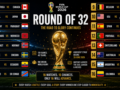
What it means for the knockout rounds: Cape Verde faces Argentina in Miami in the Round of 32.
The defending champions and the tournament’s most lethal individual attacker, Messi, are a formidable opponent, but a team that held Spain goalless has already proved it can handle elite opposition.
If Vozinha reproduces his group stage form, Cape Verde will not be embarrassed, and if Argentina take them lightly, the upset is not impossible.
- SOUTH AFRICA BEAT SOUTH KOREA TO ADVANCE
When the Group A table after Matchday 2 showed South Korea on three points and South Africa on one, the conclusion was obvious: South Korea would qualify, South Africa would go home.
What happened instead was one of the tournament’s most dramatic final matchdays. South Africa beat South Korea 1-0 in Monterrey while Czechia and Mexico played out a goalless draw, leaving Bafana Bafana as Group A runners-up with four points, advancing to the knockout rounds for the first time in their history.
The result means South Africa’s debut in the knockout stage of the World Cup comes 16 years after they hosted the tournament.
Teboho Mokoena’s suspended absence from the South Korea match was their biggest concern heading in, and the fact that they won without him illustrates exactly how collectively strong Hugo Broos’s side has become.
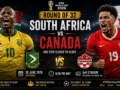
What it means for the knockout rounds: South Africa face Canada in Los Angeles, a match between two nations that have never won a World Cup knockout game.
Whoever wins that match will have made their own piece of history. Canada’s 6-0 demolition of Qatar gave them a reputation for attacking power that South Africa’s defence must handle.
But Bafana Bafana’s defensive organisation and the form of Ronwen Williams in goal make them far from a straightforward opponent.
- BELGIUM’S NEAR-EXIT AND THEIR 5-1 RESCUE
Belgium arrived at this tournament as one of the pre-tournament picks to go deep. Kevin De Bruyne, Romelu Lukaku, Lois Openda, Jeremy Doku, a squad of extraordinary individual talent that looked capable of challenging any team in the field.
What followed was two matches of collective dysfunction. A 1-1 draw with Egypt and a 0-0 draw with Iran left Belgium on the brink of the most embarrassing group stage exit in their football history. The pressure on Rudi Garcia’s squad heading into the New Zealand match was enormous.
Their response was the most emphatic of any team at the tournament. Belgium beat New Zealand 5-1, topped Group G on goal difference and entered the knockout rounds with the confidence that comes from scoring five goals in 90 minutes.
Whether that performance reflects genuine collective improvement or simply the relief of playing against an already-eliminated opponent remains the tournament’s most debated question.
What it means for the knockout rounds: Belgium face Senegal in Seattle. If this is the real Belgium, the 5-1 Belgium, they are a genuine contender to reach the quarter-finals.
If it was a mirage produced by inferior opposition, Sadio Mane and his teammates could expose the same vulnerabilities that Iran and Egypt found.
The Round of 32 will answer that question definitively.
- COLOMBIA: THE TOURNAMENT’S MOST IMPRESSIVE TEAM
Colombia’s group stage campaign has not received the global attention it deserves, partly because they are not European and partly because their opponents, Uzbekistan and DR Congo, were not the most glamorous names in the draw.
But what James Rodriguez and his teammates have produced deserves recognition. Seven points from three matches in a group that included Portugal, an attacking style built around James’s creative authority and Luis Diaz’s pace and directness, and a collective defensive organisation that has conceded just once.
They arrived as South American qualifiers with modest expectations. They leave the group stage as one of the tournament’s most complete teams.
Daniel Munoz has been particularly outstanding. The Crystal Palace man won the Europa Conference League before the World Cup started and scored in their opening two games in Mexico/USA/Canada.
His runs deep from the right back role, and the partnerships of the attackers like Luis Diaz have given Colombia a sophistication that most pre-tournament analysis underestimated.
What it means for the knockout rounds: Colombia face Ghana in the Round of 32. Ghana are a physically strong, well-organised side with several genuine match-winners. This is the most tactically balanced fixture of the entire Round of 32, and the most likely to produce the quality of football that the expanded knockout format promises.
- URUGUAY ELIMINATED EARLY WITHOUT WINNING A SINGLE GAME
Uruguay was in the same group as Spain, Cape Verde and Saudi Arabia and most people would easily predict that they alongside Spain would make the knockout stage of the competition from there.
However, after draws against Saudi Arabia and Cape Verde, Spain beat them in their final group stage match of the competition and they were sent back home.
A team consisting of the likes of Fede Valverde and Darwin Nunez could not win a single game at the World Cup, having faced Cape Verde and Saudi Arabia.
The mathematics of a 12-group format can be brutal. Two draws produced two points, which were not enough to make the cut as one of the eight best third-placed teams, given the goal difference complications.
What it means for the knockout rounds: Uruguay’s absence creates a clear path for other South American sides. With Argentina, Colombia and Ecuador all in the bracket and Uruguay gone, South America’s knockout representation is both strong and unexpected in its composition.
FAQs
Who were the biggest surprises of the World Cup 2026 group stage?
The five biggest surprises were: Cape Verde becoming the smallest nation to reach the knockout stage with three draws; South Africa beating South Korea to advance; Belgium’s near-elimination before their 5-1 win over New Zealand; Colombia’s outstanding six-point campaign; and Uruguay going home without winning a game.
Did Cape Verde qualify for the Round of 32?
Yes. Cape Verde drew all three group games against Spain, Uruguay and Saudi Arabia, to finish second in Group H with three points. They face Argentina in the Round of 32 in Miami.
Why was Uruguay eliminated?
Uruguay drew two and lost one of their group games and finished on two points, which was not enough to qualify as one of the eight best third-placed teams due to their goal difference.
How did South Africa qualify for the Round of 32?
South Africa beat South Korea 1-0 on June 24 while Czechia and Mexico drew, leaving Bafana Bafana as Group A runners-up with four points. It was their first World Cup knockout qualification in their history.